Sustainability
Our impact
At CAR Group, we understand that managing our environmental and social impact is not just a responsibility but a strategic imperative. We also recognise the positive social and environmental effects that come from closely managing and maintaining high levels of governance in our supply chains.
Material topics
The following section outlines our approach to addressing these material topics at CAR Group. For a detailed review of our performance in these areas over the past year, please refer to our latest Sustainability Report and Databook.

Climate management
Climate risk sits at the centre of how we think about the long-term resilience of our business, and shapes our approach to governance, strategy and risk management across CAR Group. As a Group 1 entity under the Australian Sustainability Reporting Standards (ASRS), we report against AASB S2 Climate-related Disclosures, the mandatory framework that has now succeeded the voluntary Task Force on Climate-related Financial Disclosures (TCFD) framework we followed from 2023. Our Climate Disclosures Report, available within our Annual Report, sets out our most material climate-related risks and opportunities and accompanies this Sustainability Report and Sustainability Databook.
Climate risk assessment and scenario analysis strengthens our business resilience by helping us understand and mitigate risk, identify opportunities for competitive advantage, and make informed strategic, financial and operational decisions. With the added support of scenario analysis, we’re able to look further ahead: anticipating risks, capitalising on opportunities and grounding our decisions in evidence rather than assumption. This keeps us well placed to maintain and grow investment in CAR Group, adapt to a changing regulatory environment, and meet the expectations of our shareholders and the broader business community.
Our footprint and how we’re reducing it
Our own carbon footprint is small compared to many companies, but we recognise that our marketplace businesses facilitate the buying and selling of vehicles, which are significant contributors to global greenhouse gas emissions. We remain committed to climate action across our operations: being accountable for our impact, transparent about our environmental performance, and deliberate in pursuing ways to reduce our footprint wherever we’re able to.
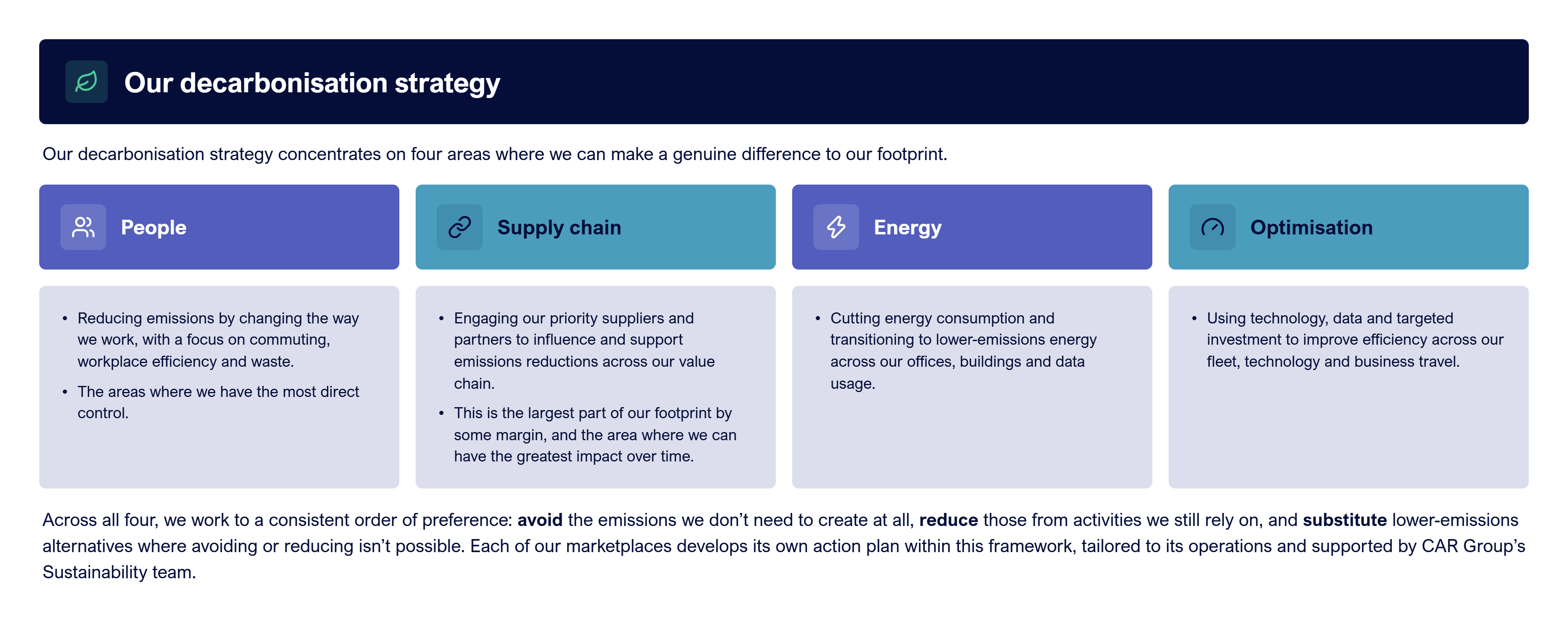
As a business that has grown consistently through acquisition, our GHG operational boundary is constantly shifting, which makes it genuinely difficult to forecast with confidence how our footprint will change as we continue to grow. It’s for this reason, rather than any lack of ambition, that we’ve chosen not to set a net zero target. We’ve always taken pride in ‘doing what we say and saying what we do’, and we’d rather commit to something we can stand behind than make a pledge toward a finish line we don’t yet know how to reach.
Irrespective of this, our preference remains to keep decarbonising our business operations where we can, and to be transparent about our progress each year across our annual reporting suite. We see climate management as an ongoing practice rather than a task to be completed, and as we mature in this space we’ll continue to feed our learnings back into our business strategy, building on the progress we’ve made while recognising we still have a long road ahead.
EV education
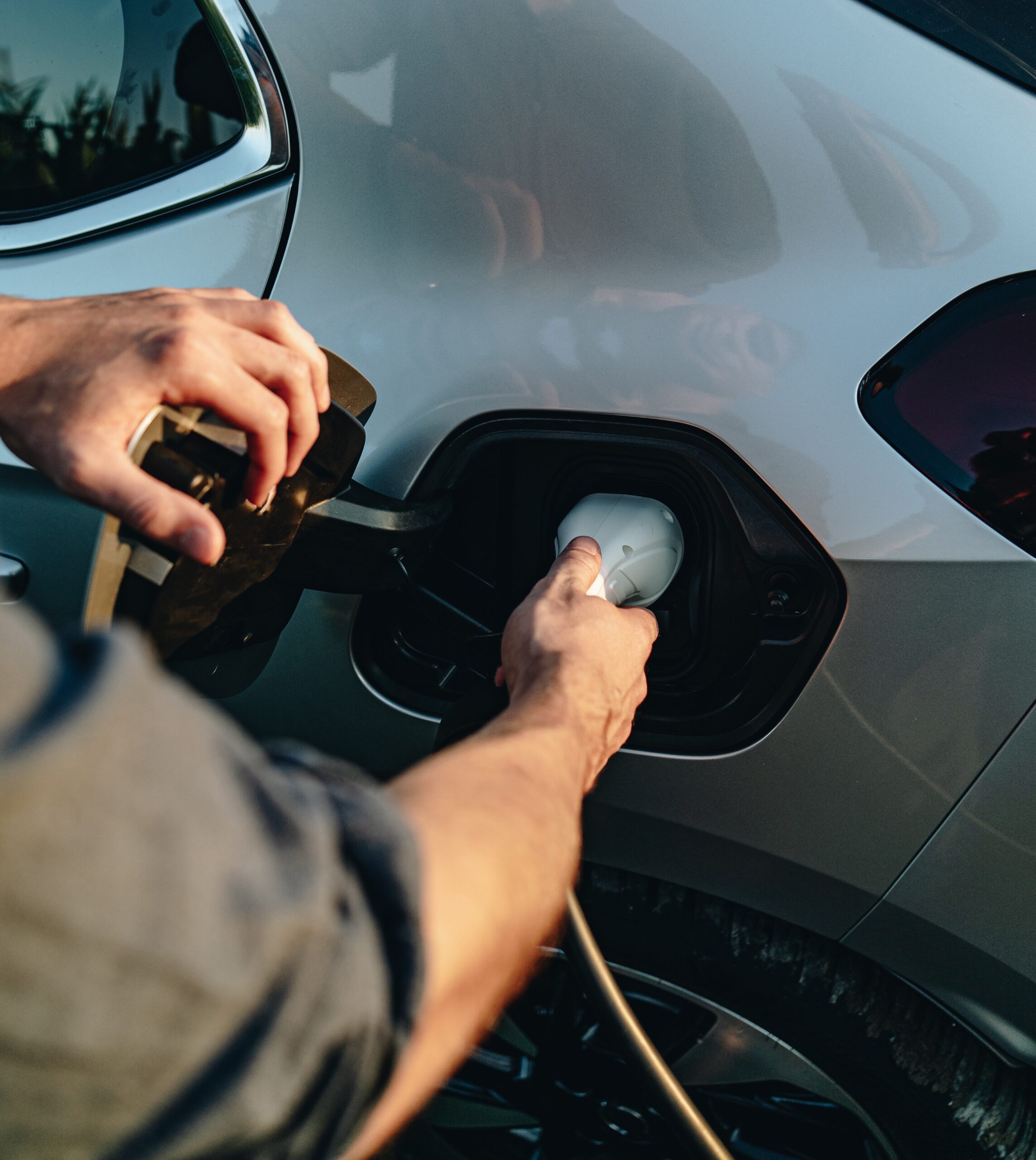
As vehicle marketplaces, we have an opportunity to play a genuine role in the shift to lower-emission transport, not only by managing our own operational footprint, but by helping the consumers who use our platforms make informed choices. Buying an EV still comes with more unknowns than buying a petrol or diesel vehicle: choosing a home charger, understanding running costs, weighing up battery health and range, and working out whether a used EV is a safe bet. Through our editorial and content teams across the globe, we continue to publish research, articles and video content that help demystify EV ownership and support consumers as they navigate this shift.
A growing openness to the used EV market matters for accessibility. It brings the cost of EV ownership down and gives more consumers a realistic pathway into electric vehicles. Helping people navigate this shift with confidence, whether they’re buying new or used, is core to our role in the transition.
We’ve also made it simple for consumers to search for and compare EVs across our marketplaces, and we share the insights from our EV research with media and industry each year to support a broader, more informed conversation about the EV transition in the markets where we operate.
Supply chain engagement
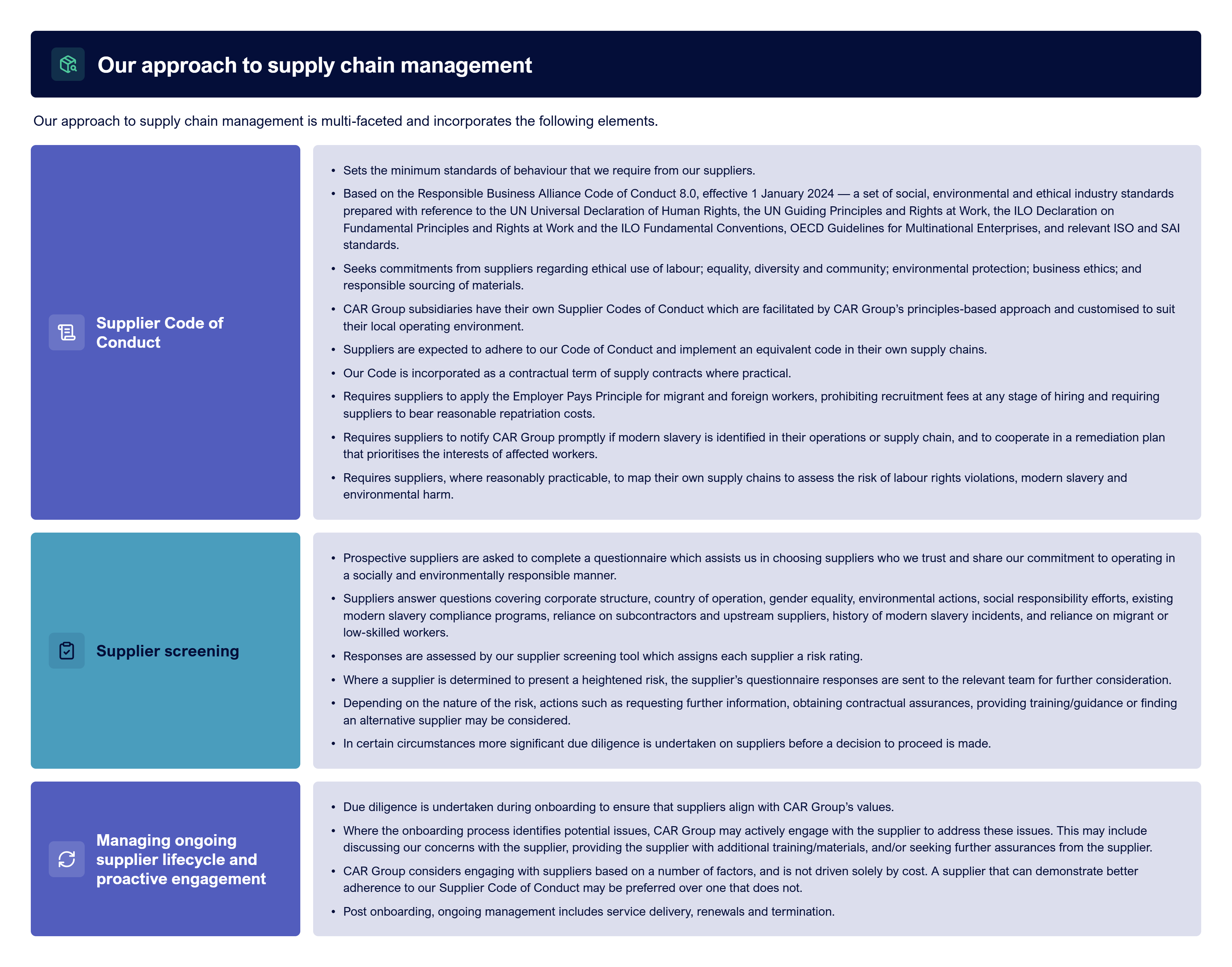
We take a principled and proactive approach to managing social and ethical risks in our supply chain. All supply chains carry the potential for social harm, including risks related to human rights, labour practices and modern slavery. Our success in remaining a leader in the long term lies in an operating model that embeds responsible business practices across our operations and supply chain.
Our approach is grounded in transparency, accountability and alignment with our values. Our governance framework includes oversight by the Board and Risk Management Committee, with operational support from a Modern Slavery Working Group. This ensures supply chain risks are actively managed and integrated into our broader risk and compliance processes.
Our commitment to operating a socially and environmentally responsible business is underpinned by CAR Group’s Code of Conduct, Human Rights Policy, and Modern Slavery Policy, which set the ethical standards we hold ourselves to. This is reinforced by our Supplier Code of Conduct, which sets the minimum standards we expect of every supplier and extends our approach to human rights across our supply chain. Together, these commitments help us do business with suppliers who share our values and whose conduct aligns with ours.
By maintaining high standards and embedding responsible business practices across the supplier lifecycle, we aim to:
– protect people;
– uphold human rights; and
– meet the expectations of our customers, team members and the communities we serve.
CAR Group complies with Australia’s Modern Slavery Act 2018 (Cth). Our most recent Modern Slavery Statement can be found here.